
The short answer
You need duct cleaning when there's a specific problem, such as dust blowing from vents, pest debris, mold, or leftover construction dust. It isn't a routine chore every home needs. We inspect first, then recommend cleaning, sealing and repair, or replacement based on what we find.
Your ducts carry all the air your furnace, heat pump, or air conditioner moves through your home. Heavy dust, debris, or pests in them can hurt your comfort. Leaks into the attic or crawlspace waste energy. TotalFlow HVAC Repair Service cleans, seals, and repairs duct systems for homeowners in Livermore, Pleasanton, Dublin, and nearby cities. We start by looking at what's actually inside your ducts, so you only pay for work that makes a real difference.
Signs Your Ducts Need Cleaning
Not every home needs duct cleaning on a schedule. Plenty of systems run for years with ducts that are a little dusty but working fine. Cleaning makes sense when there's a specific problem. These are the ones we see most often:
Livermore and the rest of the Tri-Valley have hot, dry summers, and outdoor dust finds its way inside. If your filter clogs quickly, have us take a look before you assume the ducts are the problem. Sometimes the fix is a better-fitting filter or a sealed return.
- Dust puffs out of supply registers when the system starts, or dust settles back on furniture within a day or two of cleaning
- Visible lint, debris, or buildup on register covers and the return grille
- Signs of rodents or insects, such as droppings, nesting material, or a musty or sour smell when the system runs
- Visible mold inside ducts or on the air handler, often near the coil or in damp crawlspaces
- Recent remodeling, drywall work, or sanding that wasn't sealed off from the HVAC system
- A home you just moved into, where you don't know when the ducts were last checked
- Rooms that run much hotter or colder than the rest of the house, which can point to blocked or disconnected runs
What We Check During a Duct Inspection
Before we recommend any work, we inspect the system from end to end. On accessible runs we use a camera, so you can see what we see. We look at:
If we find mold, we'll explain what we see and where the moisture is likely coming from. If you clean without fixing the cause, the problem usually comes back.
- Supply and return registers, grilles, and the return plenum
- Inside duct surfaces, for dust depth, debris, pest activity, and moisture
- Flex duct in the attic or crawlspace, for crushing, kinks, sagging, and tears
- Joints at the plenum, boots, and branch takeoffs, for gaps or separation
- Insulation on ducts that run through unconditioned spaces
- Air filter size, fit, and condition, and whether air is slipping around the filter
- The blower wheel and evaporator coil, since a dirty blower or coil will quickly dirty clean ducts again
- Airflow at the registers in rooms with comfort complaints
Cleaning, Repair, or Replacement
Cleaning only helps if the ducts themselves are sound. Depending on what the inspection shows, we'll lay out your realistic options:
Rodents can contaminate flex duct, and mold can grow through its inner liner. In either case the duct usually can't be cleaned well, and replacing those runs is the more reliable choice. We'll tell you plainly when cleaning won't get you the result you want.
If you're also weighing a new furnace or heat pump, it can make sense to plan the ductwork at the same time. Bay Area Air District rules don't require you to replace working equipment. However, natural gas furnaces manufactured from 2029 must meet a zero-NOx emission standard, which in practice points many homeowners toward heat pumps when a furnace is replaced after that date. Heat pumps can have different airflow needs, so we can check whether your existing ducts will work with one.
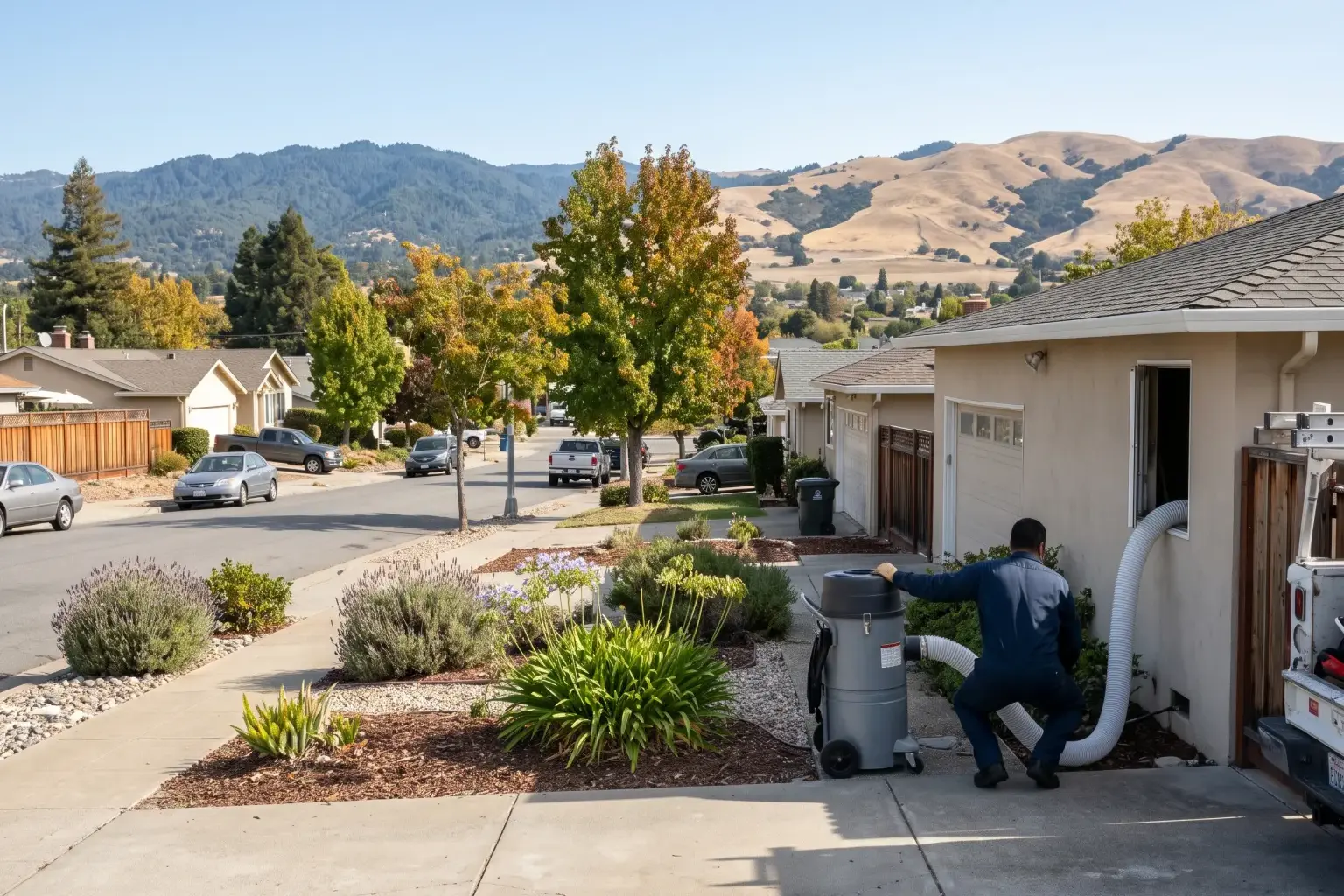
- Cleaning: for rigid or flex duct in good condition that has dust, debris, or construction residue. We use negative-pressure vacuum equipment and agitation tools to loosen buildup and pull it out of the system.
- Sealing and repair: for leaky joints, disconnected boots, or a few damaged sections. We reconnect and seal joints with mastic or approved foil tape and replace short runs as needed.
- Partial replacement: when one area is crushed, torn, or contaminated beyond cleaning, such as a stretch of attic flex duct.
- Full replacement: when the ducts are aging, poorly insulated, undersized, or damaged throughout. New ductwork can be sized and laid out to fix long-standing hot and cold rooms.
What Affects the Cost of Duct Cleaning
We give you a written quote after the inspection. These factors shape it:
We don't add services you don't need. If the inspection shows your ducts are in decent shape, we'll tell you so.
- The size of your home and the number of supply and return registers
- The type of ductwork: rigid metal, ductboard, or flex
- Access, since tight attics, low crawlspaces, and ducts above finished ceilings take more time
- How much buildup there is, and whether there's pest debris or mold
- Whether the blower, coil, or plenum also need cleaning
- Any sealing, repairs, or sections that need replacing
- The number of HVAC systems in the home
How a Duct Cleaning Visit Works
Most visits follow the same steps:
Cleaning a home with a single system usually takes part of a day. Larger homes, multiple systems, and repair work can take longer. We'll give you a time estimate before we start.
- Scheduling: we ask what you've noticed, how old the home is, and where the equipment and ducts are located.
- Inspection: the technician checks the system, takes photos or camera footage, and walks you through the findings.
- Options and quote: you get a clear explanation of your cleaning, repair, or replacement choices and a written quote before any work begins.
- Prep: we protect floors and furnishings near the work area and cover registers as we go.
- Cleaning or repair: we shut off the system, connect the vacuum equipment, and work through each run from the registers back to the main trunk.
- Wrap-up: we can install a fresh filter, then we run the system, check airflow, and show you before-and-after images.