
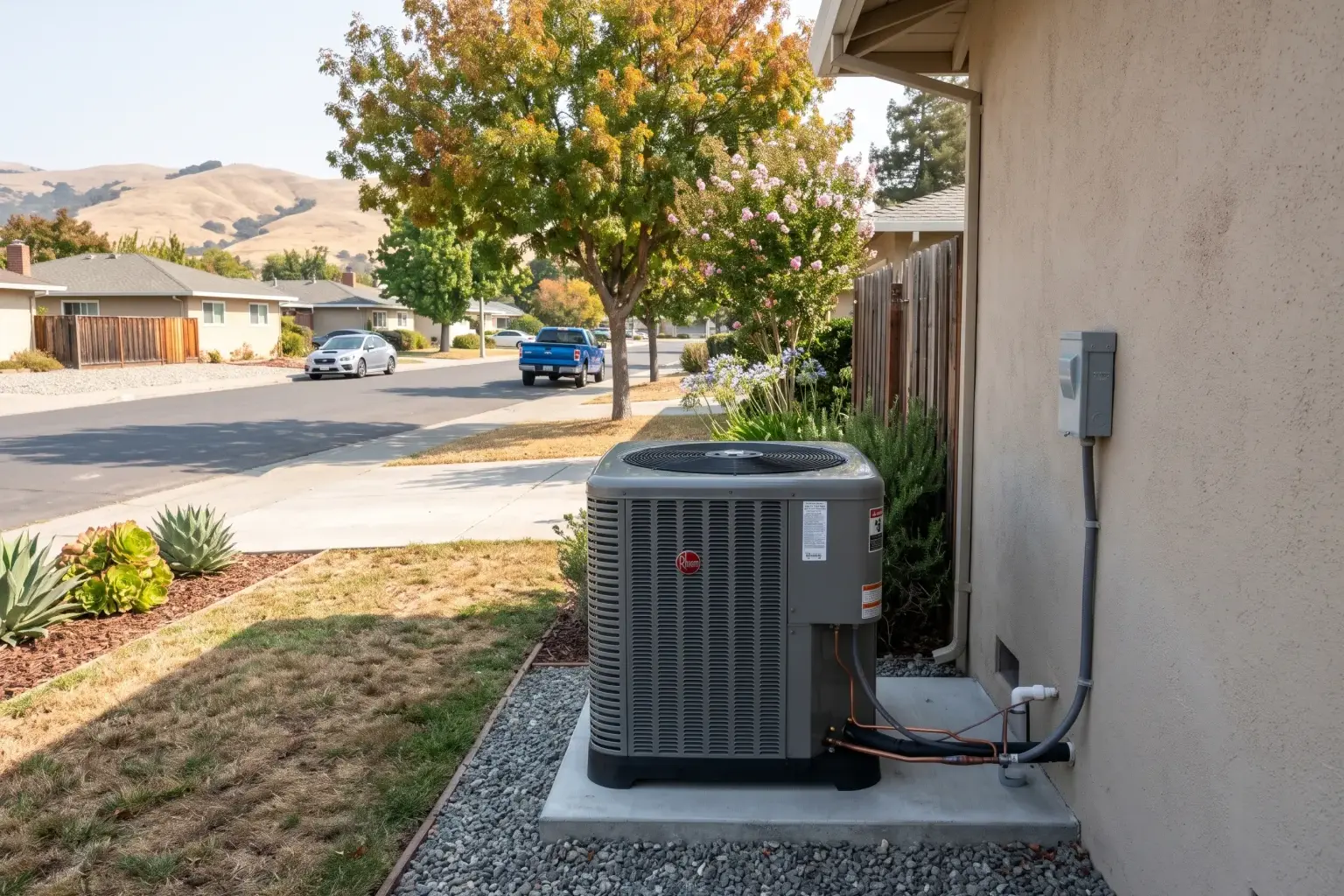
The short answer
HVAC maintenance is a scheduled inspection, cleaning, and tune-up that helps your heating and cooling equipment run efficiently and catches small problems before they turn into breakdowns. Most homes benefit from a visit before the cooling season and another before the heating season, especially for heat pumps that work year-round.
A heating and cooling system that gets regular attention runs more smoothly, uses energy more efficiently, and is less likely to quit on the first hot afternoon or cold night of the season. TotalFlow HVAC Repair Service provides HVAC maintenance for homeowners in Livermore, Pleasanton, Dublin, and nearby cities. A maintenance visit is a hands-on inspection and tune-up of your furnace, air conditioner, or heat pump. We clean what needs cleaning, test what needs testing, and give you a plain explanation of what we found. Below you'll find the signs that your system is due, what we check, how we handle repair-or-replace questions, what affects the cost, and what to expect when we come out.
Signs Your System Needs Maintenance
Many problems build slowly, so it's easy to get used to a system that isn't working the way it should. If it has been more than a year since anyone looked at your equipment, it's due. Beyond that, these are the signs we hear about most often from homeowners:
- Rooms that heat or cool unevenly, or a thermostat setting the house never seems to reach
- The system turns on and off in short bursts instead of running steady cycles
- Weaker airflow from the vents than you remember
- New noises such as rattling, squealing, grinding, or banging when the system starts
- Musty, burning, or unusual smells when the heat or air conditioning runs
- Energy bills that climb without a change in how you use the system
- Water pooling near the indoor unit or ice forming on refrigerant lines
- More dust in the house than usual, or a filter that clogs quickly
What We Check During a Maintenance Visit
Every system is a little different, so the exact checklist depends on whether you have a gas furnace, a central air conditioner, a heat pump, or a combination. In general, a maintenance visit covers the parts that wear out, collect dirt, or drift out of adjustment over time.
If we find something that needs more than routine attention, we stop and talk with you before doing any repair work.
- Air filter condition and fit, with replacement if you'd like us to handle it
- Thermostat operation and calibration
- Electrical connections, capacitors, and contactors for wear or loose wiring
- Blower motor, fan, and belt condition
- Outdoor coil and indoor coil cleanliness
- Refrigerant pressures and temperature readings on cooling and heat pump systems
- Condensate drain line and pan, cleared so water flows where it should
- Burner, flame sensor, and ignition on gas furnaces
- Heat exchanger visual inspection on gas furnaces
- Safety controls and limit switches
- Airflow at the supply and return vents
Repair or Replace: What Happens When We Find a Problem
Most maintenance visits end with a cleaned, adjusted system and nothing more to do. Sometimes we find a worn part or a developing problem. When that happens, we explain what we saw, what it means for your system, and what your options are. Small repairs like a failing capacitor or a clogged drain line can often be handled the same day.
For older equipment or larger problems, the question becomes whether to repair or replace. We look at the age and overall condition of the system, how often it has needed repairs, how well it is keeping your home comfortable, and how the repair cost compares with the remaining life of the equipment. You make the decision; our job is to give you the information to make it well.
Local rules matter here too. Bay Area Air District rules do not require you to replace working equipment. They apply only when an existing furnace fails or is replaced. Under the Air District's furnace rule, natural gas furnaces manufactured from 2029 must meet a zero-NOx emission standard, which in practice points homeowners toward heat pumps for replacements after that date. If your furnace is aging, it's worth thinking about this now rather than during an emergency.
On incentives: the federal Energy Efficient Home Improvement Credit covered qualifying heat pumps placed in service before the end of 2025, and it is not available for new installations after that. Bay Area homeowners can still check BayREN and their local clean energy provider for current heat pump and electrification incentives. Amounts and availability change by funding cycle, so we confirm the current offer before including it in any quote.
What Affects the Cost of HVAC Maintenance
We'll give you a clear quote before any work begins. The cost of a maintenance visit depends on a few factors:
- The type of system: furnace only, air conditioner only, heat pump, or a combined system
- The number of units in your home
- How long it has been since the last service and how much cleaning the coils and components need
- Accessibility of the equipment, such as attic, crawlspace, or tight closet installations
- Whether filters or other routine parts are replaced during the visit
- Any repairs you approve after the inspection
How a Maintenance Visit Works
You start by contacting us to schedule a time that works for you. We'll ask what kind of system you have, roughly how old it is, and whether you've noticed any problems so the technician arrives prepared.
When the technician arrives, they'll ask about any comfort issues, then inspect and service the indoor and outdoor equipment. Most visits take a few hours or less, depending on the system and its condition. You don't need to stay next to the equipment, but we're happy to show you what we're doing and answer questions as we go.
Before leaving, the technician walks you through what was checked, what was cleaned or adjusted, and anything that needs attention now or should be watched in the future. If a repair is recommended, you'll get a clear explanation and a quote, and nothing proceeds without your approval. We'll also suggest when to schedule the next visit based on your system and how hard it works.